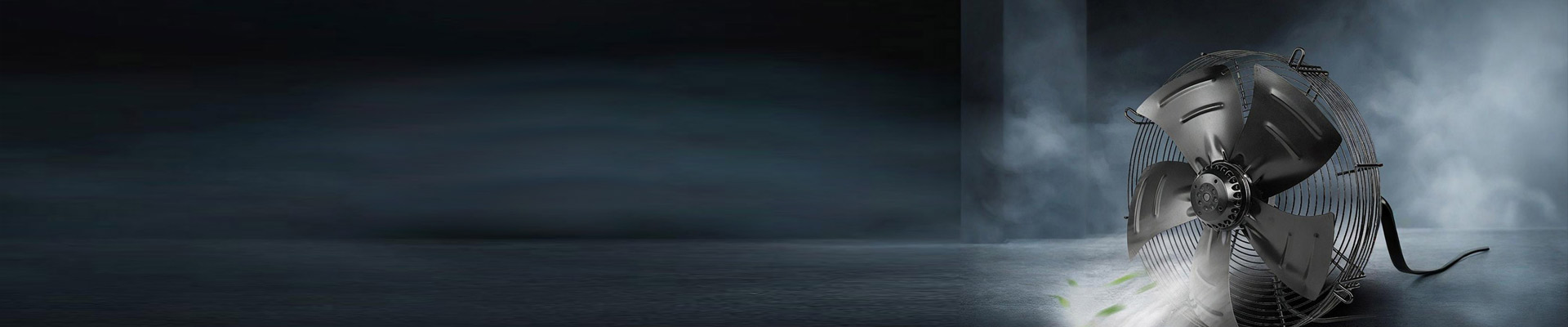
Featuring a reasonable structural design, our centrifugal fans deliver outstanding advantages including low noise, high efficiency, long service life, compact size and safe and reliable operation.
With the advancement of technology, outer rotor air conditioning fans have been widely applied in various industries. Vibration is an inevitable common issue during fan operation, which may trigger a series of equipment faults. The main causes of fan vibration are summarized into the following five categories:
1. Design Factors
The design of outer rotor air conditioning fans shall be determined based on actual operating conditions, including service environment, temperature, air volume, air pressure and working medium. Unreasonable model selection and design by manufacturers will lead to poor dynamic performance and operational vibration. Common problems include improper fan design, unsatisfactory dynamic characteristics, structural irrationality and stress concentration. In addition, if the designed operating speed is close to or within the critical speed range, or the thermal expansion coefficient is inaccurately calculated to cause poor thermal alignment, severe operational vibration will occur.
2. Manufacturing Factors
Manufacturing quality directly determines the operating stability of outer rotor air conditioning fans. Vibration faults may result from insufficient machining precision of components, inferior raw materials with inadequate strength and manufacturing defects. Besides, failure to meet technical standards for rotor dynamic balance will also cause persistent fan vibration during operation.
3. Installation and Maintenance Factors
Installation accuracy is critical to the stable operation of fans. Substandard installation will seriously damage the operating performance of equipment. Major influential factors include improper mechanical installation, component misalignment and excessive preload, poor shaft system alignment, and inaccurate adjustment of mechanical geometric parameters such as fitting clearance, interference magnitude and relative position. Moreover, improper long-term storage of rotors will impair dynamic balance accuracy, and non-standard maintenance will destroy the original fitting precision and structural coordination of the equipment, inducing vibration failure.
4. Operation Factors
Daily maintenance and standardized operation decisively affect fan operating quality. Vibration problems will occur if technical parameters such as medium temperature, pressure, flow rate and load deviate from design values, leading to abnormal operating conditions. Running the fan at over-speed or over-load will alter its inherent operating characteristics. In addition, poor lubrication or cooling performance, local rotor damage and scaling, improper operation during startup, shutdown and speed adjustment, uneven thermal expansion, and excessive residence time in the critical speed range will all trigger continuous fan vibration.
5. Equipment Aging Factors
All mechanical equipment has a limited service life, and performance degradation is inevitable after long-term operation. For outer rotor air conditioning fans, common aging problems include increased rotor deflection and degraded dynamic balance, local rotor damage, shedding or cracks, as well as component wear, pitting and corrosion. Aging of fitting surfaces leads to insufficient interference or loose connection, damaging fitting accuracy. Uneven settlement of the equipment foundation and deformation of the fan casing will also cause structural vibration of the whole machine.


 0575-86167222